


Are markets ready for tokenised stocks’ global impact?
September 2025Are markets ready for tokenised stocks’ global impact? Nasdaq has filed with the SEC to tokenise every listed stock by 2026. If approved, this…

We previously explored the necessary requirements for compliantly bringing tokenized real-world assets (RWA) and securities to DeFi. To achieve this, DeFi protocols must be designed to restrict participation rights to prevent illegal funding resources. Moreover, the availability of trusted data oracles is crucial to provide pricing data for private assets, and trading venues must be accessible to ensure minimum liquidity.
Fortunately, the emergence of innovative solutions such as ComplyDeFi and the DINO distribution network has made it possible for the current tokenization market to fulfill all of these necessary requirements. However, for the development of institutional DeFi to succeed, it is crucial for stakeholders to understand their roles and responsibilities. Below, we have listed some key roles that are usually required:
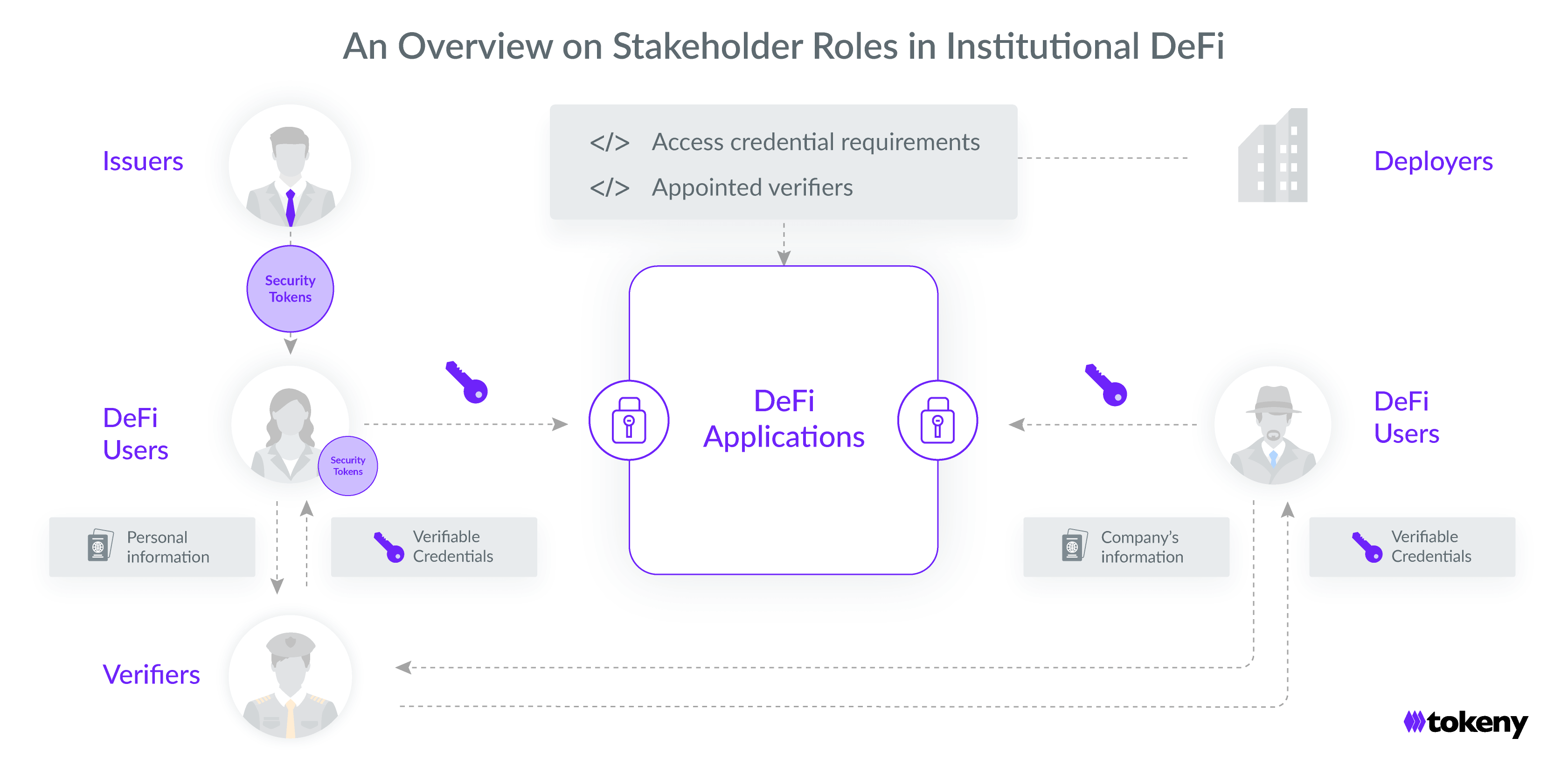
By understanding these key roles and responsibilities, institutions can find their niche in institutional DeFi, which can open up new business opportunities and facilitate the development of institutional DeFi.

ANNOUNCEMENT

INTERVIEW
Emprendeduros Tokenizes VC Fund, Utilizes Tokeny
Emprendeduros democratizes investment opportunities and increases community involvement by tokenizing its venture capital fund with Tokeny.
Crowdfund Insider
BlackRock ETF? There’s a Token For That
A Swiss company is offering a token tied to a BlackRock ETF that tracks hundreds of big American tech stocks. But you can’t get the token in America.
Decrypt
Siemens issues its first digital bond on blockchain
German industrial giant Siemens has issued its first digital bond on public blockchain. The bond has a face value of €60 million and a maturity of one year.
The Cryptonomist
Hong Kong issues 800M HKD in tokenized green bonds
The bonds were underwritten by four banks and priced at a yield of 4.05%.
Cointelegraph
European Union Bank Again Uses Ethereum to Explore Tokenized Bonds
The European Investment Bank deployed a euro bond on Ethereum back in 2021, but this time it’s only using the network for record keeping.
Blockworks
JP Morgan touts bank-issued deposit tokens
Blockchain-based deposit tokens, rather than stablecoins, could emerge as the foundation for stable digital money.
Finextra
EIB takes digital bond issuance another step forward
The European Investment Bank has been leading the way in the issuance of digital bonds. With the completion of its third transaction earlier this year, the bank has reached several important milestones.
OMFIF
EC launches blockchain regulatory sandbox for 20 projects annually through 2026
The European Commission’s regulatory sandbox will match up public and private sector projects with the appropriate participating regulators for assessments and consultations.
Cointelegraph
EU looks to place limit on banks holding crypto
European Union lawmakers have voted in favor of a draft bill that imposes “prohibitive” capital requirements on banks holding crypto assets, citing the need for stricter regulations.
Forkast
El Salvador’s Historic Digital Asset Securities Law Passes
El Salvador has announced the passing of its “Digital Asset Issuance” legislation that was proposed last November.
Bitfinex
A monthly newsletter designed to give you an overview of the key developments across the asset tokenization industry.